

Portfolio · Power
The right UPS for the building, not the catalog.
Power infrastructure isn't generic. The right system depends on the load profile, the available footprint, the runtime expectations, and what the next ten years look like. We carry strong product lines from manufacturers who solve different parts of that puzzle — and we'll help you pick the one that fits, not the one we have a quota on.
Where power lives
Four contexts. Four different conversations.
The same word — "UPS" — covers wildly different products. The first job is figuring out which conversation we're actually having.
IDF & wiring closets
Single-phase, 1–5 kW, often at the limit of an existing 20A circuit. Lithium chemistry buys you footprint and a battery you don't replace mid-lifecycle.
5–20 kW, modular
Where most organizations actually live. Modular platforms let you scale capacity and runtime without buying it all up front, and Lithium is now a solid option alongside VRLA.
Three-phase, redundant
10–600 kW per row, redundant configurations, integrated monitoring, hot-scalable. The decisions get more nuanced — and the cost of getting them wrong gets larger.
Process & PLC loads
Ferroresonant or isolated topologies for harsh electrical environments — the kind that destroy commodity UPS products. Different rules, different products.
Battery chemistry
Start on VRLA. Move to Lithium later.
The battery decision used to be locked in on the purchase order. Multi-chemistry UPS platforms change that: the UPS ships on VRLA, and when the batteries come due for replacement, the replacement can be Lithium-ion — in the same UPS, with no new frame.
That changes when you pay for Lithium. Its premium normally lands on day one as part of the capital purchase. With a multi-chemistry platform, the purchase is priced on VRLA, and the move to Lithium happens at the battery-replacement cycle — a spend many organizations carry in the operating budget rather than a capital request.
Ship on VRLA
The UPS is purchased and installed with lead-acid batteries, at the lower up-front cost.
Swap to Lithium-ion
When the VRLA batteries reach end of life, the replacement is Lithium-ion modules or packs in the same UPS.
Fewer replacements ahead
Lithium's longer service life means fewer battery cycles over the remaining life of the UPS.
APC Smart-UPS On-Line SRTD
Single-phase · 2.2 and 3 kVA · rack/tower
Schneider's first multi-chemistry Smart-UPS. Start on VRLA battery packs and move to Lithium-ion packs in the same chassis, without replacing the UPS. Up to 10 external battery packs for extended runtime, and the same batteries and spare parts are shared across the range.
Vertiv Liebert APS
Single-phase modular · 5–20 kVA · 208 V · rack/tower
VRLA or Lithium-ion battery modules in the same frame. Moving from VRLA to Lithium is a field retrofit of the battery strings, with no firmware update. The two can't be mixed in one frame, so the change is made across all strings at once. Lithium modules are rated for up to 10 years of service.
Vertiv Liebert APM2
Three-phase modular · 10–150 kVA (208 V) · 20–600 kVA (480 V)
The same idea at the three-phase tier. The APM2 takes VRLA or Lithium-ion internal battery modules on its 10–120 kVA frames, with an intelligent battery management system for both chemistries, and VRLA or Lithium-ion external battery cabinets on the larger frames.
Manufacturer · Single & three-phase
APC by Schneider ElectricAPC. Power, rack, and monitor — together.
APC's portfolio spans the full physical infrastructure stack — UPS, racks, PDUs, and EcoStruxure monitoring — designed to work together as a single environment. For projects that benefit from that integration, the whole conversation collapses into one vendor relationship, one set of monitoring tools, one service contract. We carry the full Smart-UPS family for single-phase loads and the Galaxy line for three-phase. Right now there are two products worth a longer conversation.
KAT-5 is an authorized APC Elite Partner.
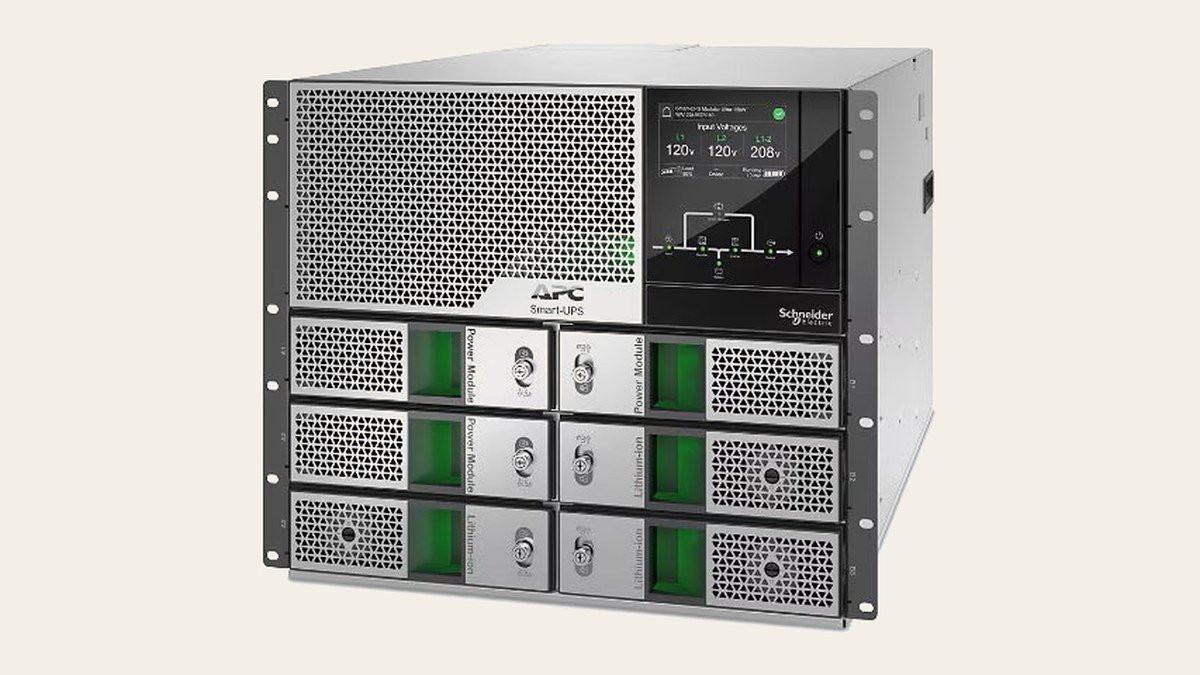
APC Smart-UPS Modular Ultra
Single-phase modular Lithium-ion · 5–20 kW · 9U or 16U rack
The Modular Ultra is APC's purpose-built replacement for the discontinued Symmetra LX — and the timing is the story. Symmetra LX hit end-of-life in December 2024. Anyone running one in production is on borrowed time.
The Modular Ultra keeps backwards-compatible electrical wiring with Symmetra LX (no rewire), upgrades chemistry to Lithium-ion (8–10 year battery life, no mid-cycle replacement), and runs 50% smaller and 60% lighter than the system it replaces. If you have a Symmetra LX in service today, this is a conversation worth having before the battery cycle decides for you.

APC Galaxy VS
Three-phase modular UPS · 10–75 kW (208 V) · 20–150 kW (480 V) · Lithium-ion option
The Galaxy VS is APC's modular three-phase UPS for edge sites and small-to-medium data centers — online double-conversion, built from slide-in power modules. Up to 97% efficient in double conversion and up to 99% in eConversion mode, with optional N+1 power modules inside the frame and Live Swap models that let a power module be added or replaced with the UPS online.
Where it fits: the room that has outgrown single-phase. The 208 V models carry on past where the Modular Ultra tops out; the 480 V models carry a row or a small facility. It's available with smart modular batteries inside the UPS cabinet or with external battery cabinets, Lithium-ion included, and it reports into the same EcoStruxure tools as the rest of the APC stack.
Manufacturer · Single & three-phase
VertivVertiv. Mission-critical heritage.
Vertiv earned its reputation in environments where the cost of a power event is measured in serious money — telecom, healthcare, financial, federal. The Liebert family has been deployed at that bar globally for decades, and the modern lineup brings hot-scalable capacity, Lithium-ion options, and efficiency curves that hold up at the part-load percentages where most facilities actually run.
KAT-5 is a Vertiv channel partner. Manufacturer start-up and service can be quoted with the equipment.
![[product name]](https://images.squarespace-cdn.com/content/v1/69f0f8c67593773cc2f21c20/3b79f38c-7295-4e76-869f-b3f7ac4d4076/vertiv-apm2.jpg?format=1500w)
Vertiv Liebert APM2
Three-phase modular UPS · 30–600 kW · Lithium-ion option
The APM2 is Vertiv's modern modular three-phase platform — a direct descendent of the original APM that's been deployed in data centers globally for over a decade. APM2 brings flexibilities the original couldn't: hot-scalable capacity, wider efficiency curves at lower load percentages, and Lithium-ion battery options for sites that need the footprint and lifecycle benefits.
Where it fits: data center rows or facility-level UPS where you want headroom for growth without buying it all up front. Pairs naturally with Vertiv cooling at the row and perimeter levels.
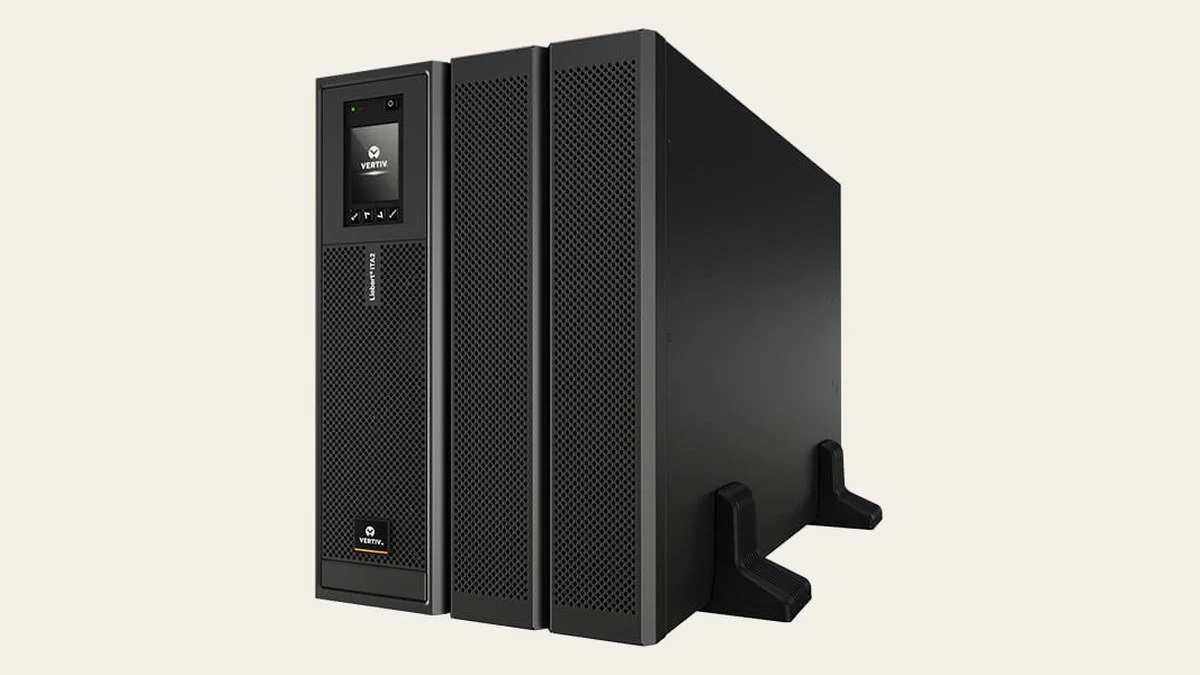
Vertiv Liebert ITA2
Vertiv ITA2 UPS
The ITA2 is Vertiv's workhorse for 1–10 kVA single-phase applications — server rooms, network closets, distributed IT. Online double-conversion topology (load is always running on inverter-conditioned power, not just during a power event), tower or rack form factors, optional extended runtime battery cabinets.
Where it fits: bracket where you'd otherwise reach for a Smart-UPS or 9PX. The ITA2 is Vertiv's option in that range, and where Vertiv site-level service support is part of the standard, it's the obvious call.
Manufacturer · Pure-play UPS specialist
Xtreme Power ConversionXPCC. The capable alternative, increasingly the right one.
XPCC's roots run through Necedah, Wisconsin — the original home of Best Power and the Ferrups platform — which is why their UPS lineage feels familiar to anyone who's deployed Eaton or Powerware over the past 30 years. They're a pure-play UPS specialist (no chillers, no enclosures, no DCIM stack), focused exclusively on UPS and adjacent power conditioning across the topology range from 350 VA to 700 kVA. We carry their lineup alongside APC and Vertiv, and we recommend them more often than most procurement teams expect — particularly for Symmetra LX, Ferrups, and BladeUPS migrations where XPCC's successor products are purpose-built replacements with backwards-compatible architectures.
KAT-5 is an XPCC reseller. Manufacturer start-up and service can be quoted with the equipment.
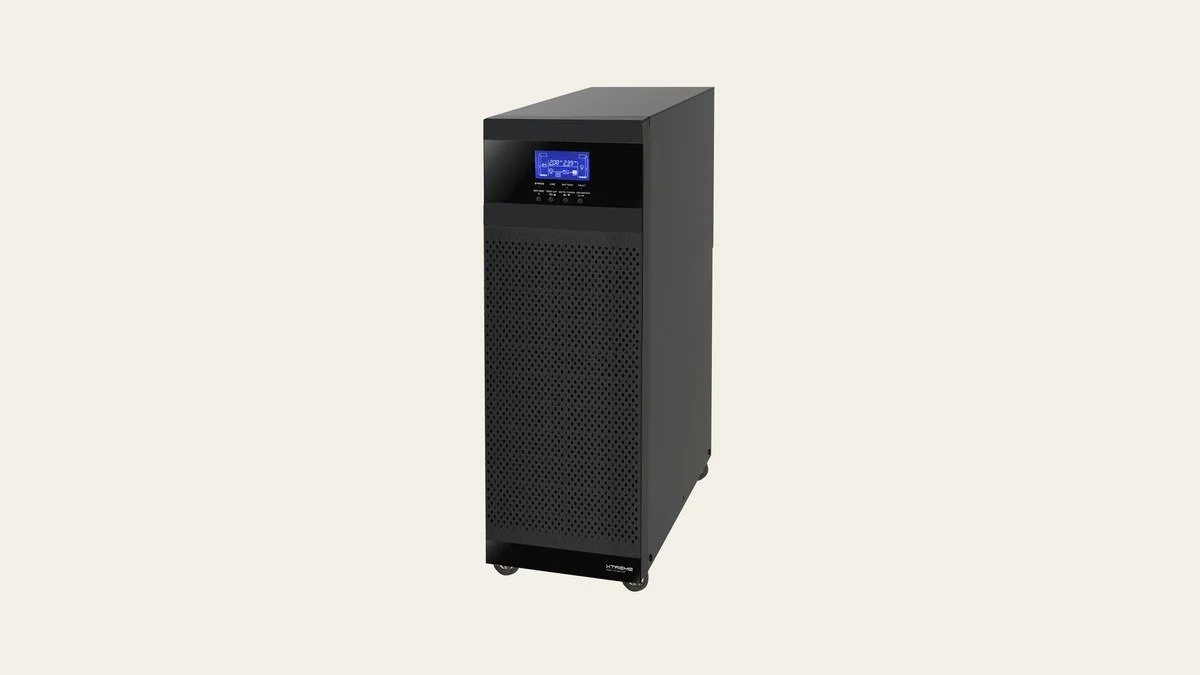
XPCC TX91 Isolated Online UPS
Single-phase isolated online · 3.8–10 kVA · 240/120V
The TX91 is the modern replacement for the Eaton Ferrups (formerly Best Power Ferrups) — a ferroresonant transformer-based UPS that built its reputation in the 1980s as the gold standard for industrial and mission-critical applications where the load is harsh and the tolerance for downtime is zero.
911 dispatch centers. Marine vessels. Military installations. Factory PLCs. Eaton discontinued the Ferrups FE series in late 2024. The TX91 picks up where it leaves off, with the same isolated transformer topology and runtime-flexible architecture. If you have a Ferrups in production right now, this is your migration path.
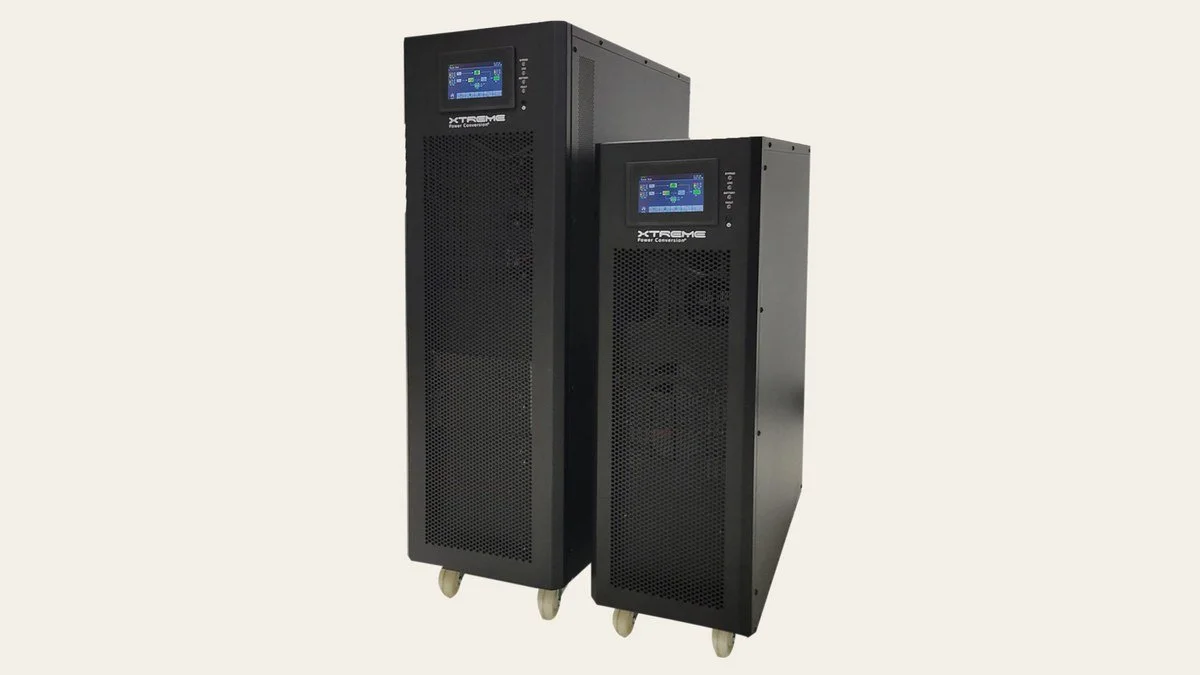
XPCC Li90 & E91
Three-phase online UPS · 10–40 kVA (E91) · up to 30 kW Lithium (Li90)
The E91 is XPCC's standard three-phase platform for compact facility deployments — 10–40 kVA, online double-conversion, 208/120V. The Li90 takes the same capacity bracket and goes Lithium: 30 kW three-phase in a footprint 40–50% narrower and 30–40% lighter than traditional VRLA three-phase systems.
Where it fits: retrofit and edge deployments where floor loading and space matter. Same chemistry advantages as APC's Modular Ultra, applied at the three-phase tier.
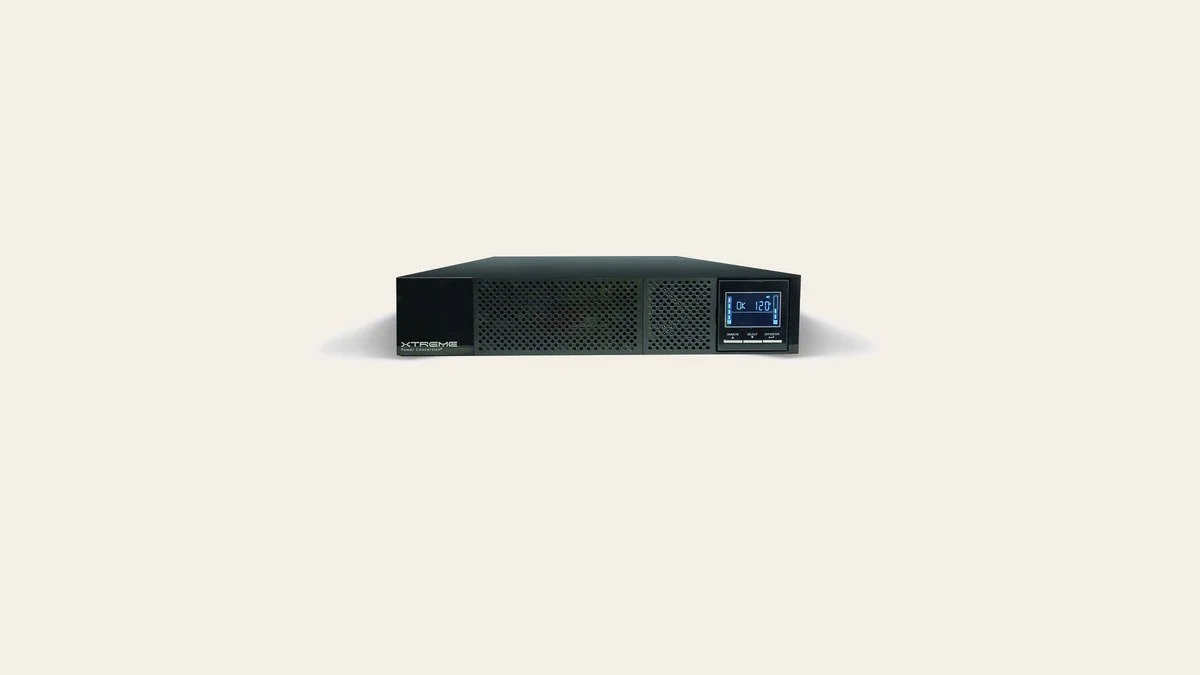
XPCC J90 & P91Li
Single-phase Lithium-ion · 1–3 kVA · 1U rack or rack/tower
The J90 is XPCC's 1U rack Lithium-ion UPS for edge, industrial, and compact IT — LiFePO₄ chemistry, 10-year battery life, operates up to 50°C (122°F). The P91Li is the rack/tower variant in the same chemistry.
Both target the bracket where APC's Smart-UPS with Lithium-Ion lives, with similar value props (no mid-life battery replacement, lighter weight, longer warranty) and competitive pricing. Worth comparing side-by-side at quote time.
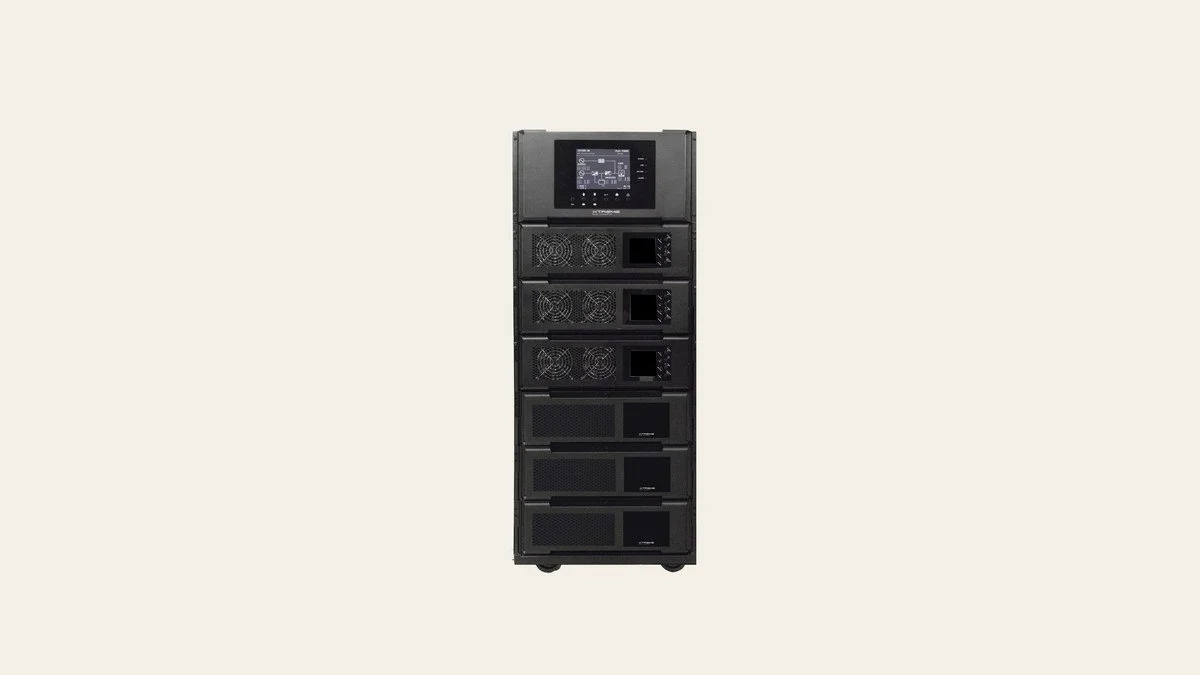
XPCC M90C Modular Three-Phase UPS
Three-phase modular · 5–24 kW (M90C-6S) · scales 5 kW at a time
The M90C is XPCC's competitive answer to Eaton's BladeUPS — a modular three-phase platform that scales 5 kW at a time, hot-swappable power modules, integrated maintenance bypass, and a frame factor designed for retrofit installations.
If you have a BladeUPS in production today, the M90C is the line to evaluate when the system reaches end of service. Comparable scalability, comparable modularity, fresh platform.
Manufacturer · Three-phase distribution & custom
PowerStream SolutionsPowerStream. Distribution, built to order.
The UPS is half of a three-phase project. The other half is the gear that gets power to it, around it, and out to the load — and that gear is rarely a catalog item. PowerStream Solutions designs and builds custom data center power distribution in Aledo, Texas, with engineering, sheet metal and copper fabrication, assembly, and testing all done in-house. That's what makes them useful: an extensive portfolio of UL 891 equipment to start from, and the ability to change it to suit the room. Their design work centers on power density and footprint, which is exactly the constraint most of our projects are fighting.
KAT-5 is a PowerStream Solutions reseller.

Custom data center power distribution units
Engineered to order · site-specific · built in-house
Most data center distribution problems are fit problems. The ampacity is ordinary; the room isn't. The unit has to land in a specific footprint, take cable from a specific direction, carry a specific breaker schedule, and match the electrical service the building actually has.
There is no standard unit here. Every PDU we've had PowerStream design was drawn for the site it went into. They custom-design to the specification — from a single unit to a production run — and build it under one roof: CNC laser and press brake, busbar fabrication, welding, powder coat, assembly, and commissioning-level testing before it ships. One engineering team carries the design from concept through production.
If your design calls for a distribution unit nobody lists, send us the one-line and the footprint.

PowerStream PowerPass UPS Bypass Switchboards
UL 891 · single- and multi-UPS · up to 2500A in a 24" wide section
A three-phase UPS needs a way to come out of service without dropping the load. PowerPass is PowerStream's UL 891 bypass family, in four forms: Slim (up to 2500A in a 24" wide by 48" deep footprint), Core (a hinged side car for front cable access), Pro (4-pole stored-energy Square D MTZ breakers), and Tile (modular 20" wide sections for multiple UPS systems, with load bank breaker and distribution options).
Where it fits: alongside any of the three-phase UPS platforms on this page, and especially in rooms where the bypass has to share floor space with everything else.

PowerStream PSB UL 891 Switchboards
UL 891 · up to 5000A · up to 200 kAIC · 208–600 V
The PSB is PowerStream's low-voltage switchboard line, built with Square D MasterPact and PowerPact breakers and engineered to the project specification — copper or aluminum bus, cable lug, busway flange, or close-coupled transformer connections. Every lineup gets primary injection testing of its ground fault systems before it leaves the factory.
Lead time is the story here. Engineered-to-order lineups start at six weeks, and a stock program of 2000A, 3000A, and 4000A boards (480Y/277V, 65 kA) has a base package that can ship within a week — useful when the switchboard is the item holding up the schedule.
Category · NEC Class 4 power
PanduitFault Managed Power. Power at a distance.
Class 4 power is new — it appeared in the 2023 NEC, and most engineers are still meeting it for the first time. Panduit's Fault Managed Power System is a production-ready, deployment-proven Class 4 implementation, and it's worth understanding even if you don't have a project for it yet, because it solves problems traditional power topologies can't.
KAT-5 is a Panduit reseller. FMP is a recent addition to our portfolio.
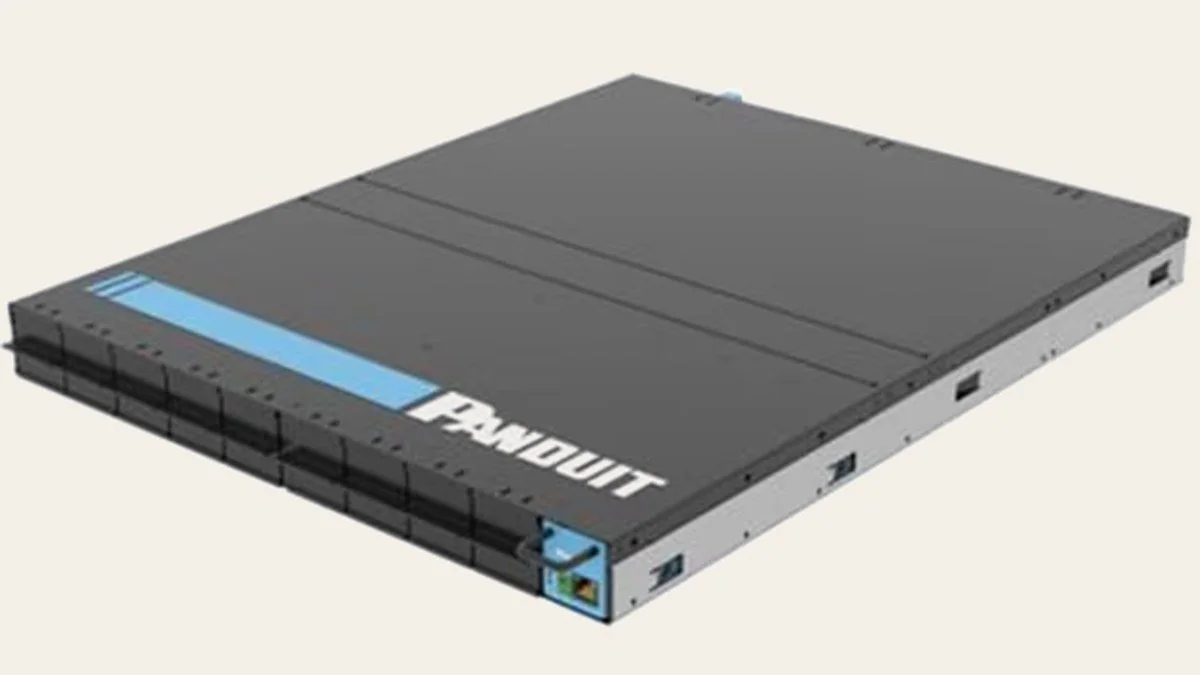
Panduit FMP — Fault Managed Power System
NEC Class 4 · up to 2km transmission · standard structured cabling
Traditional electrical power has a topology problem. Low-voltage DC (PoE and similar) can't go very far before voltage drop kills it. High-voltage AC requires conduit, licensed electricians, and code-compliance work that makes "just power that camera over there" expensive. FMP fills the gap between them.
It delivers higher voltages (up to 450V) over standard structured cabling, with continuous millisecond-scale fault monitoring that shuts the circuit down before anyone could be exposed to dangerous current. Use cases: powering wireless APs, IP cameras, access control, edge compute, security, and remote switches at distances and locations conventional power can't reach economically.
If your project has wireless density, distributed switching, or remote loads at the edge of what PoE can deliver, FMP is worth a look.
What KAT-5 adds
The product is the easy part.
Anyone can resell a UPS. Choosing the right one for the project is a different job, and it's the one we do. We're physical infrastructure specialists: we walk the building, talk through the solution, and provide the manufacturer's services for a smooth start-up and integration. We support engineers, distributors, contractors, and end users to make sure the best solution is selected for their project's needs.
Let's talk
Tell us what you're working on.
Send us the load list, the floor plan, or just the question. We'll come back with a recommendation, a budgetary number, and an honest read on whether the gear you're already considering is the right fit. No pressure to commit until we both agree it makes sense.